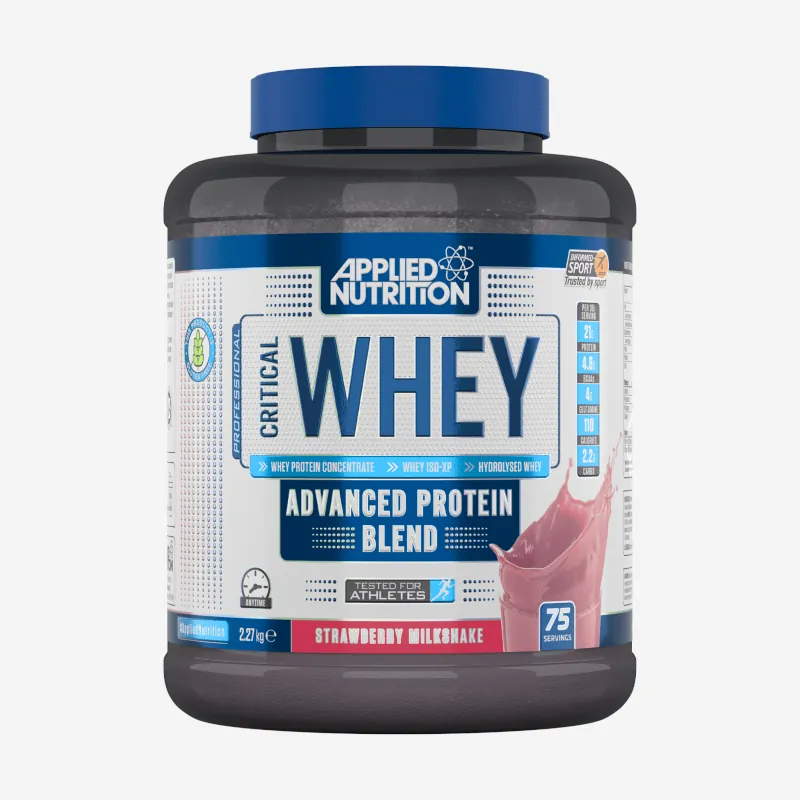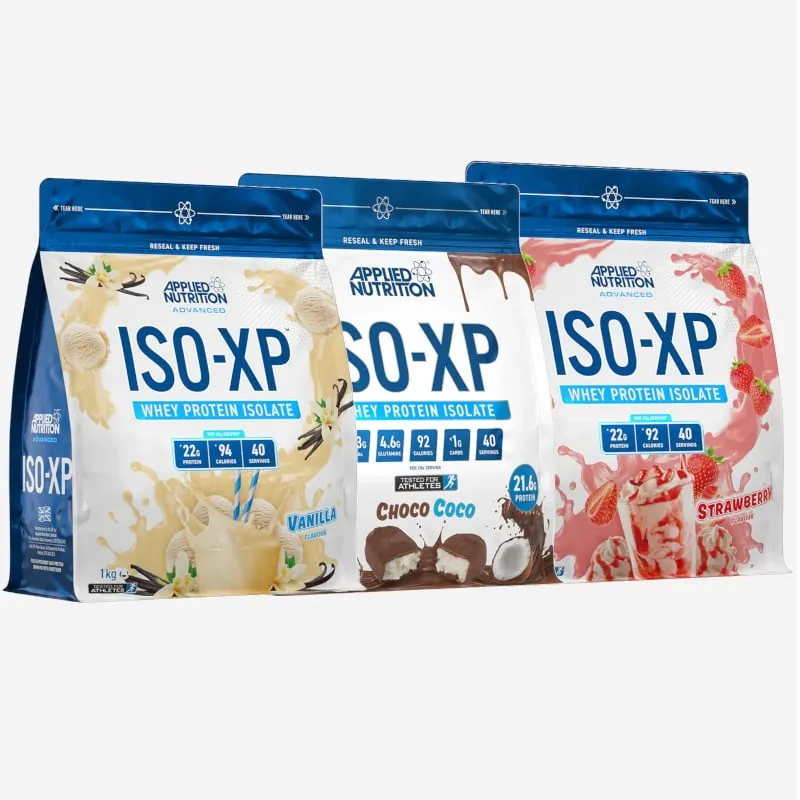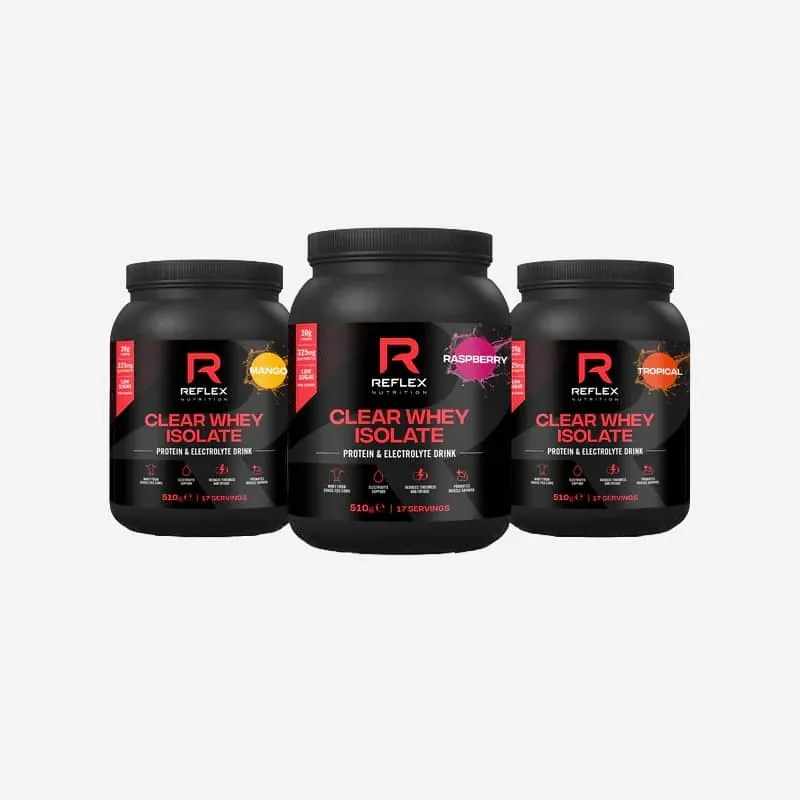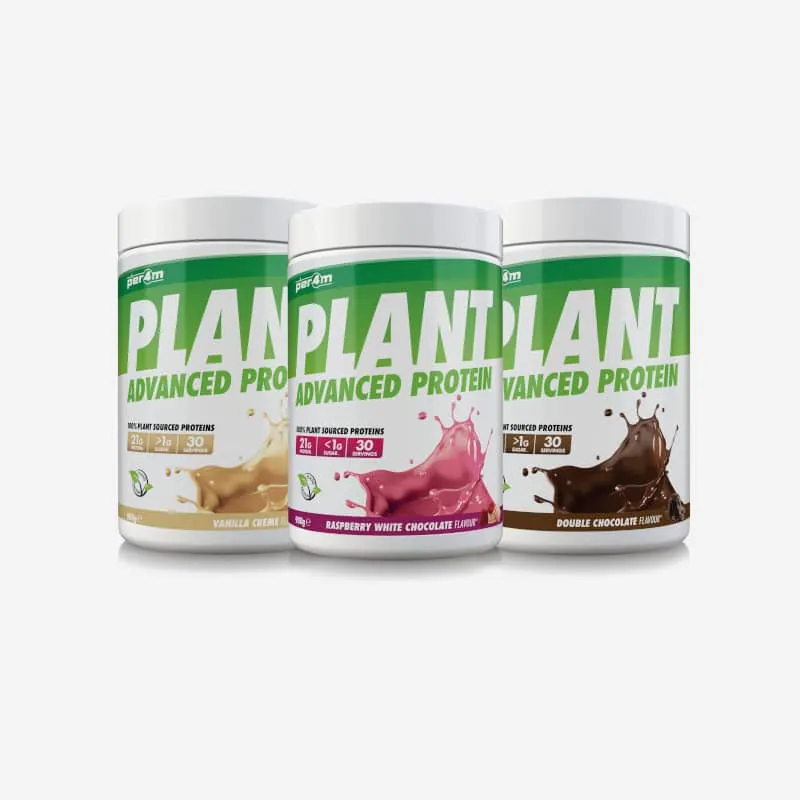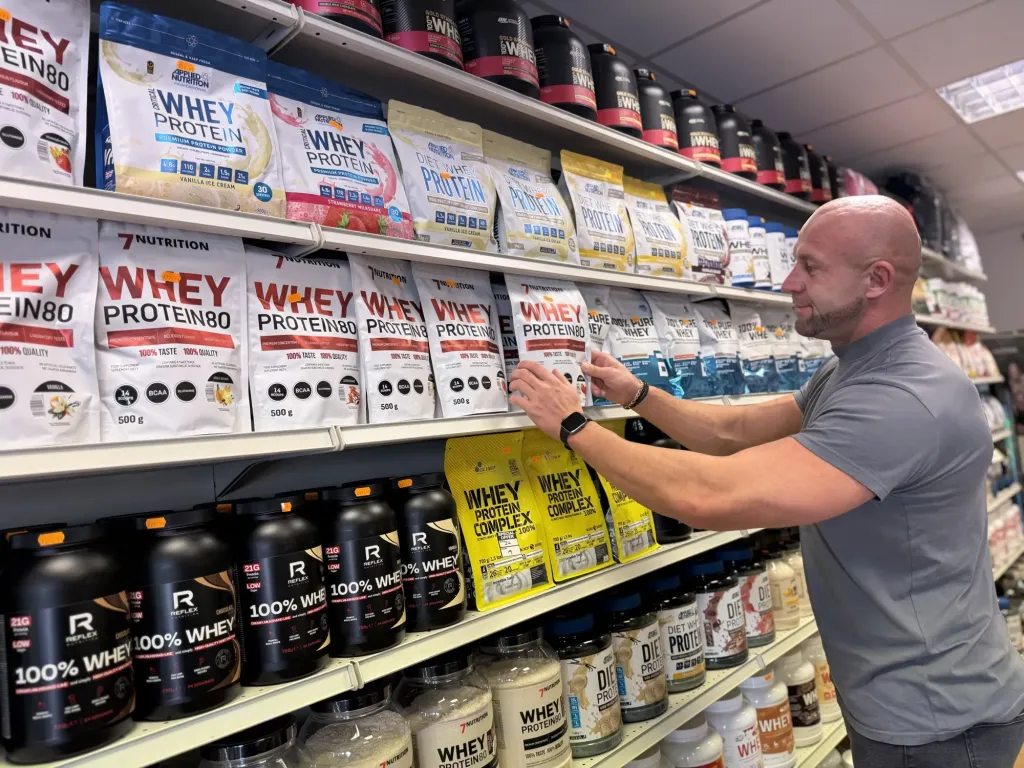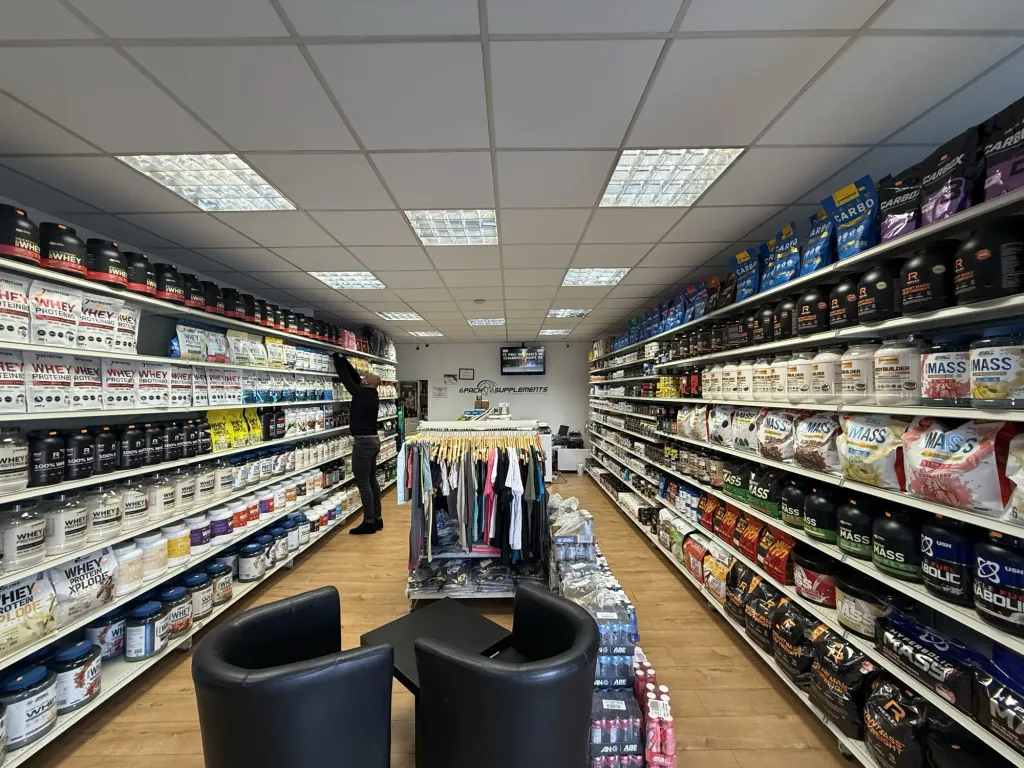
For most people, a standard whey protein (a concentrate or concentrate–isolate blend) is the simplest choice and usually the cheapest per serving. Pick isolate or clear whey for less lactose or a thinner drink, vegan protein if you avoid dairy, and a mass gainer only if you struggle to eat enough. Your daily total matters more than the tub: the International Society of Sports Nutrition (ISSN) suggests 1.4–2.0g per kg of body weight per day for most exercising people.
The five main types at a glance
Most protein powders fall into one of five groups. The figures below are typical ranges rather than any specific product, so always check the label of the tub you're looking at.
| Type | Protein per serving (typical) | Lactose | Texture | Best for | Typical price per serving |
|---|---|---|---|---|---|
| Whey concentrate and blends | About 18–24g per 30g | Some | Creamy, milky | Everyday use and value | Roughly 60p–£1 |
| Whey isolate | About 24–27g per 30g | Very little | Thinner, mixes easily | Less lactose, fewer carbs and fat | Roughly £1–£1.50 |
| Clear whey | About 20g per serving | Very little | Thin and juice-like | People who find milky shakes heavy | Roughly £1.20–£1.60 |
| Vegan (pea, rice, soy, blends) | About 18–24g per 30g | None | Thicker, earthier | Plant-based and dairy-free diets | Roughly 80p–£1.10 |
| Mass gainer | Varies widely; often 30g+ in a much bigger serving | Usually some | Thick, heavy shake | People who struggle to eat enough | Roughly £1.50–£3 |
Prices are rough UK guides and vary with brand, flavour and offers; bigger tubs usually work out cheaper per serving. Scoop sizes differ too, so to compare like with like, look at protein per 100g.
Whey concentrate and blends
Whey protein comes from the liquid left over when milk is made into cheese. Concentrate is the least processed form, so it keeps a little of milk's fat and lactose, which is also why it tastes creamy.
Many tubs labelled simply "whey protein" are blends of concentrate and isolate, sometimes with hydrolysed (partly broken-down) whey. They sit between the two on price and lactose, and suit most people.
Whey isolate
Isolate is filtered further to remove most of the fat and lactose, so a higher share of each scoop is protein. It's thinner, mixes easily in water, and is the usual first swap if you're sensitive to lactose, although levels vary, so check the label. You pay a little more for the extra processing.
Clear whey
Clear whey is isolate that's been processed to mix into a thin, fruity drink rather than a milkshake. It suits people who find milky shakes heavy, or who want something refreshing after a sweaty session. Expect a little less protein per scoop and a higher price per serving.
Vegan protein
Plant proteins are usually made from pea, rice, soy or a blend. Blends are common because pea and rice complement each other's amino acid profiles. They're dairy-free, a little thicker and earthier in taste, and work well with plant milk or in a smoothie. Check the allergens, as some contain soy.
Mass gainers
A mass gainer is protein plus a lot of carbohydrate, and sometimes fat, so a serving is usually several hundred calories. It's a tool for people who struggle to eat enough to hit a calorie target, not a stronger protein. If you simply want more protein, a regular whey or vegan powder is cheaper and easier to fit into your day.
How much protein do you need?
Start with food: the NHS Eatwell Guide groups beans, pulses, fish, eggs and meat as the main protein foods. Meals should do most of the work. The ISSN makes the same point: you can meet your needs from food, and a supplement is simply a practical way to top up (Jäger et al., 2017).
Protein contributes to the growth and maintenance of muscle mass. The ISSN suggests 1.4–2.0g per kg of body weight per day for most exercising people (Jäger et al., 2017). For a 75kg person, that's roughly 105–150g a day, from food and shakes combined.
More isn't automatically better. A 2018 meta-analysis of 49 trials found that, in people doing resistance training, extra protein made no further difference to lean mass, on average, once total intake passed about 1.6g per kg per day (Morton et al., 2018).
The ISSN also suggests spreading protein across the day, roughly 20–40g at a time every three to four hours, rather than packing it into one meal.
When to take it
Timing matters less than most people think. The ISSN position stand says timing is largely a matter of individual tolerance, and that protein before or after training both count. In practice, reaching your daily total and spreading it out matters more than the exact minute you drink a shake.
Some easy options:
- After training, if that's when you'll remember it.
- At breakfast, if you don't usually eat much protein in the morning.
- Between meals, if there's a long gap in your day.
Most labels suggest one to three servings a day. Don't go beyond the label, and count shakes as part of your daily total, not on top of it.
Flavour and mixing tips
- Liquid first, then powder. It stops clumps sticking to the bottom of the shaker.
- Water or milk? Water gives a thinner shake with fewer calories; milk is creamier and adds protein and calories.
- Clear whey: use cold water, shake, then give the foam 30–60 seconds to settle.
- Plant protein: add a little more liquid, or blend it with fruit and oats.
- Weigh it. Scoops are approximate, so use scales for your first few servings.
- Watch coffee flavours. Some contain real coffee, and so caffeine. Check the label if you're sensitive to caffeine or pregnant.
- Try before you commit. Start with a smaller tub, or if you're near Reading, pop into our Oxford Road shop and we'll talk you through the flavours.
A quick safety note
Check the allergens: whey comes from milk, and many products contain soy. If you're pregnant or breastfeeding, have a kidney condition or another medical condition, or take medication, speak to your GP or pharmacist before significantly increasing your protein. For under-18s, protein should come from meals.
FAQs
Is whey or plant protein better?
Neither is better for everyone. Whey contains all nine essential amino acids and is often cheaper per serving; plant blends suit vegan and dairy-free diets. Choose the one you'll use consistently.
Should I take protein on rest days?
Yes, if you need it to reach your target. The ISSN's guidance is per day, not per training day.
Do I need a mass gainer to bulk up?
Only if you genuinely struggle to eat enough. A gainer is mostly extra calories from carbohydrate; if you can eat more food, that usually costs less.
How many shakes a day is too many?
Stick to the label, usually one to three servings, and let food provide most of your protein.
Sources
- Jäger R, et al. (2017). International Society of Sports Nutrition Position Stand: protein and exercise. Journal of the International Society of Sports Nutrition, 14:20.
- Morton RW, et al. (2018). A systematic review, meta-analysis and meta-regression of the effect of protein supplementation on resistance training-induced gains in muscle mass and strength in healthy adults. British Journal of Sports Medicine, 52(6):376–384.
- NHS: Water, drinks and your health / Eatwell Guide
- GOV.UK: Great Britain nutrition and health claims (NHC) register
Who wrote this
6 Pack Supplements team at our Reading store.
Not medical advice
This guide is general information. Speak to your GP or pharmacist before taking supplements if you're pregnant, take medication or have a medical condition.