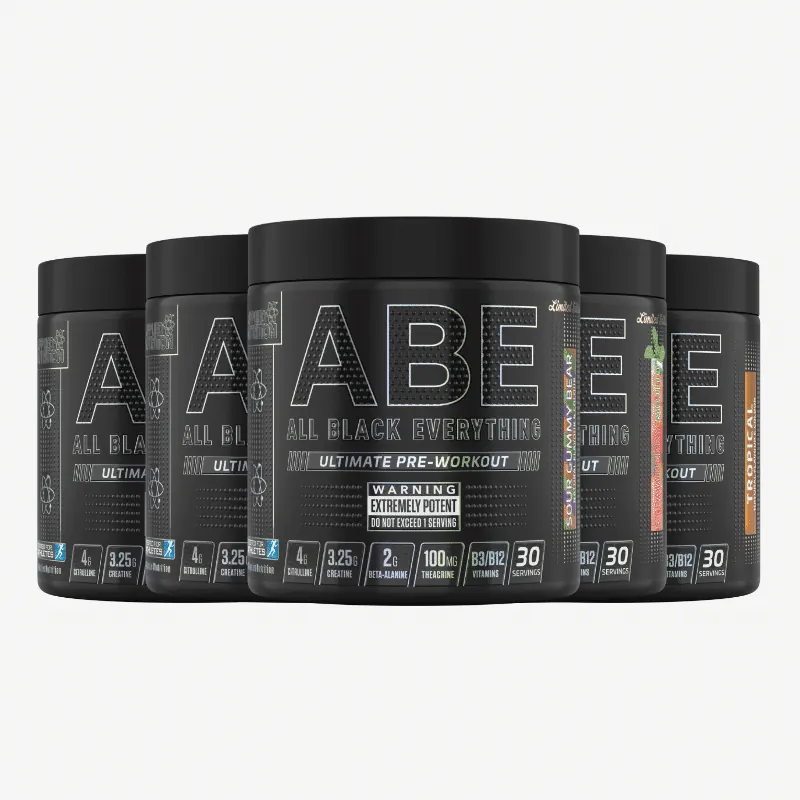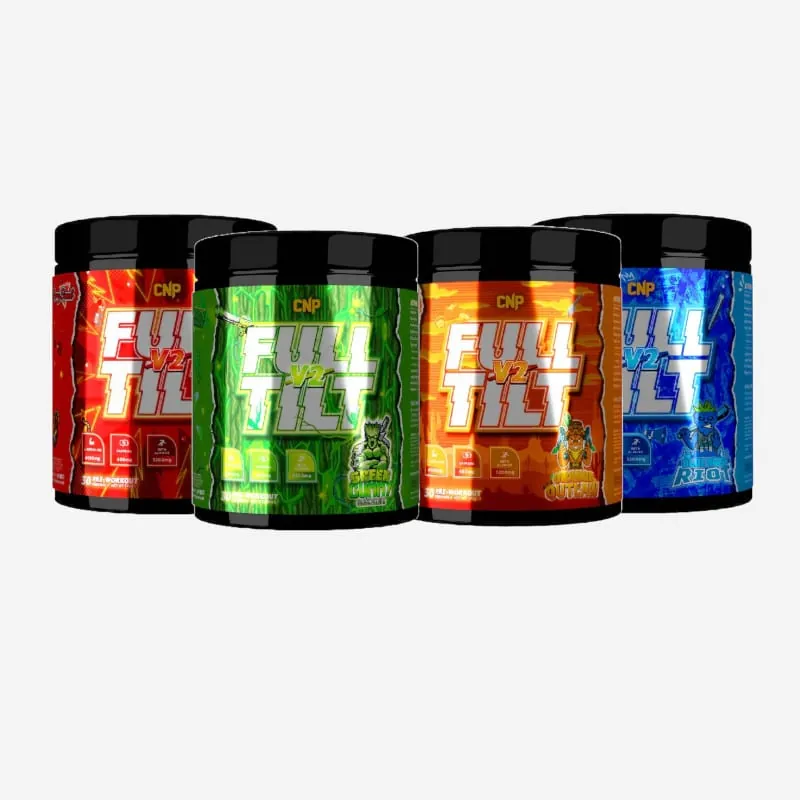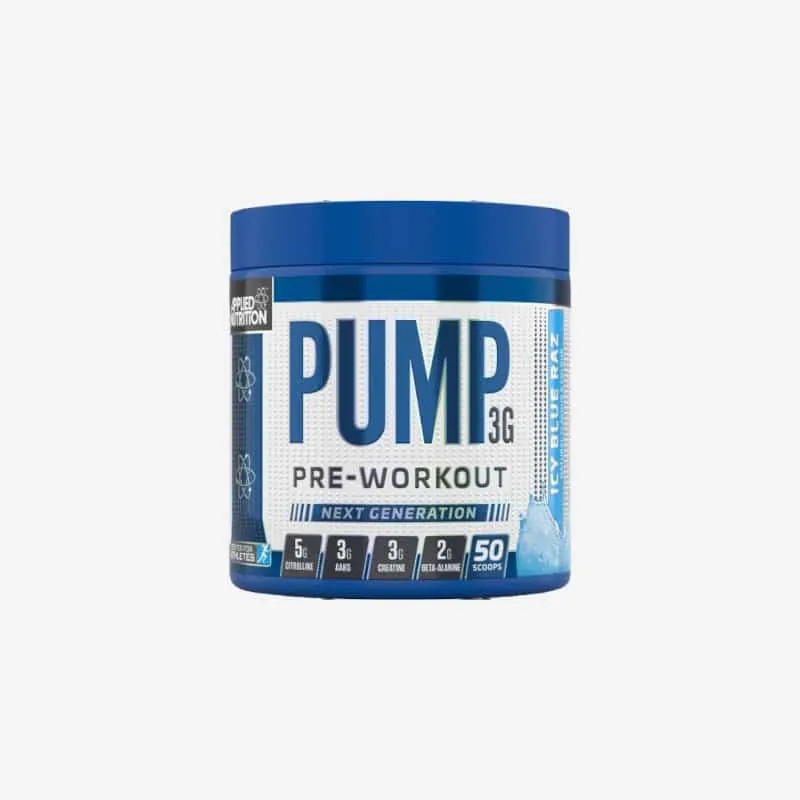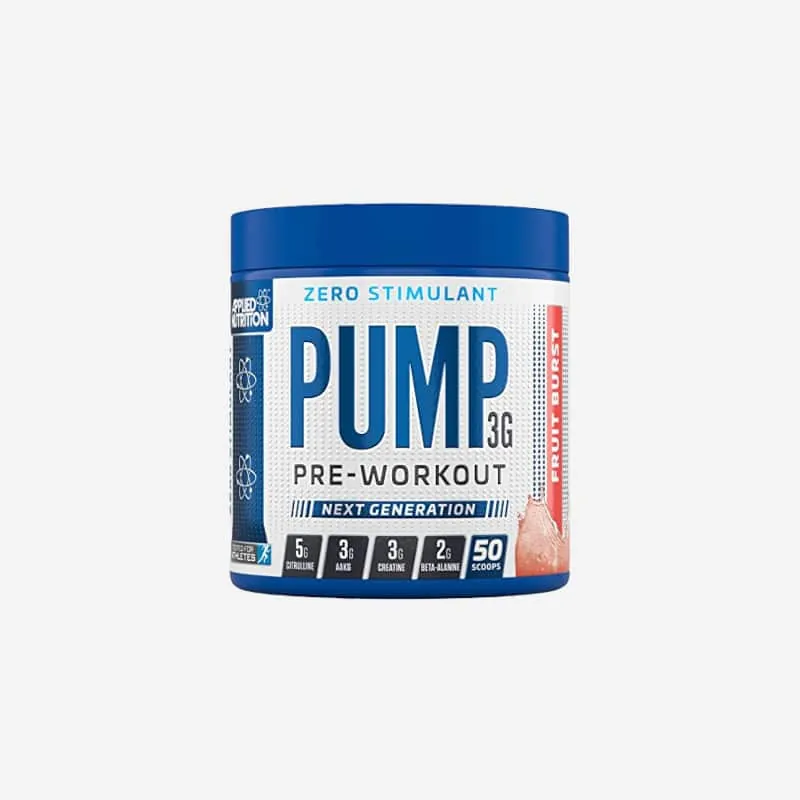
A pre-workout is a flavoured powder you mix with water and drink before training, usually 15–30 minutes beforehand. Stim versions contain caffeine, so check the mg per serving and keep your daily total within 400mg, the level the European Food Safety Authority (EFSA) says doesn't raise safety concerns for healthy adults. Stim-free versions suit evening sessions and caffeine-sensitive people, and pre-workouts aren't suitable for under-18s, during pregnancy, or for anyone with a heart condition.
What's in a pre-workout?
Formulas vary, but most are built from the same handful of ingredients. Here's what they are, in plain terms.
Caffeine
The stimulant in stim pre-workouts, and the same compound found in coffee, tea and energy drinks. Labels may list it as caffeine anhydrous, caffeine citrate or di-caffeine malate, and plant extracts such as guarana and green tea contain it too.
The International Society of Sports Nutrition (ISSN) reviewed the research on caffeine and exercise in 2021 and noted that people respond very differently to it, and that side effects become more common as the dose rises (Guest et al., 2021).
Citrulline
An amino acid, and usually the headline ingredient in "pump" formulas. Labels list either L-citrulline or citrulline malate. Citrulline malate 2:1 is roughly two-thirds citrulline, so 6g of it provides about 4g of citrulline.
Beta-alanine
Another amino acid, and the reason for the tingle. That pins-and-needles feeling on your face, neck or hands (called paraesthesia) is a common, temporary reaction that usually fades within about an hour. It isn't caffeine, and it doesn't mean the product is stronger. If you dislike it, choose a formula with less beta-alanine.
Betaine
Also listed as betaine anhydrous or trimethylglycine. It's found naturally in foods such as beetroot, spinach and wholegrains. The research on it is smaller and less consistent than for caffeine.
Glycerol
A compound that attracts and holds water, used mainly in stim-free "pump" formulas. Products with a lot of glycerol are usually mixed with more water, so follow the label.
Some pre-workouts also contain creatine. If yours does, count it towards your daily amount; our creatine guide explains how much people typically take.
Stim vs stim-free at a glance
| Stim pre-workout | Stim-free pre-workout | |
|---|---|---|
| Caffeine | Yes; the amount varies widely between products | None |
| Typical ingredients | Caffeine, citrulline, beta-alanine; sometimes creatine or betaine | Citrulline, beta-alanine, glycerol, betaine; sometimes creatine |
| Counts towards your daily caffeine | Yes | No |
| When to use | Earlier in the day | Any time, including evenings |
| Sleep | Can disrupt it if taken late | No caffeine to keep you up |
| With coffee or energy drinks | Add up your total first | Nothing extra to count |
| Suits | Healthy adults who tolerate caffeine well | Evening trainers, caffeine-sensitive people, heavy coffee drinkers |
| In our range | ABE, Full Tilt v2, 3XT Dynamite, Pump 3G | Pump 3G Zero |
How much caffeine is too much?
UK advice is in line with EFSA's 2015 review of caffeine safety:
- Up to 400mg a day from all sources doesn't raise safety concerns for healthy adults who aren't pregnant.
- Single doses up to 200mg don't raise safety concerns for healthy adults, including when taken less than two hours before intense exercise in normal conditions.
- 200mg a day is the figure for pregnancy and breastfeeding, and the Food Standards Agency (FSA) gives the same advice for pregnancy.
- Even 100mg close to bedtime may make it take longer to fall asleep, and shorten sleep, in some people.
For scale, the FSA puts a mug of instant coffee at around 100mg and a mug of tea at around 75mg. So a pre-workout with 200mg per serving plus two mugs of instant coffee already reaches about 400mg, before any energy drinks or other caffeinated supplements.
Some high-stim products contain more than 200mg per serving, so read the label closely if you're new to caffeine.
How to read a pre-workout label
- Find the caffeine per serving, in mg. If it's missing, or hidden inside a "proprietary blend" with only a total weight, you can't judge the dose. Choose a fully disclosed label.
- Count every source. Guarana, green tea and similar extracts contain caffeine. Clear labels give one total caffeine figure.
- Check the serving size. Some servings are one scoop, some are two, and scoops vary, so compare in grams.
- Look for the caffeine warning. Products with added caffeine should state the amount and carry a warning about children and pregnancy. If there isn't one, be wary.
- Look for creatine, so you don't double up with a separate tub.
- Compete in tested sport? Choose a product covered by a third-party batch-testing scheme, and check the batch number.
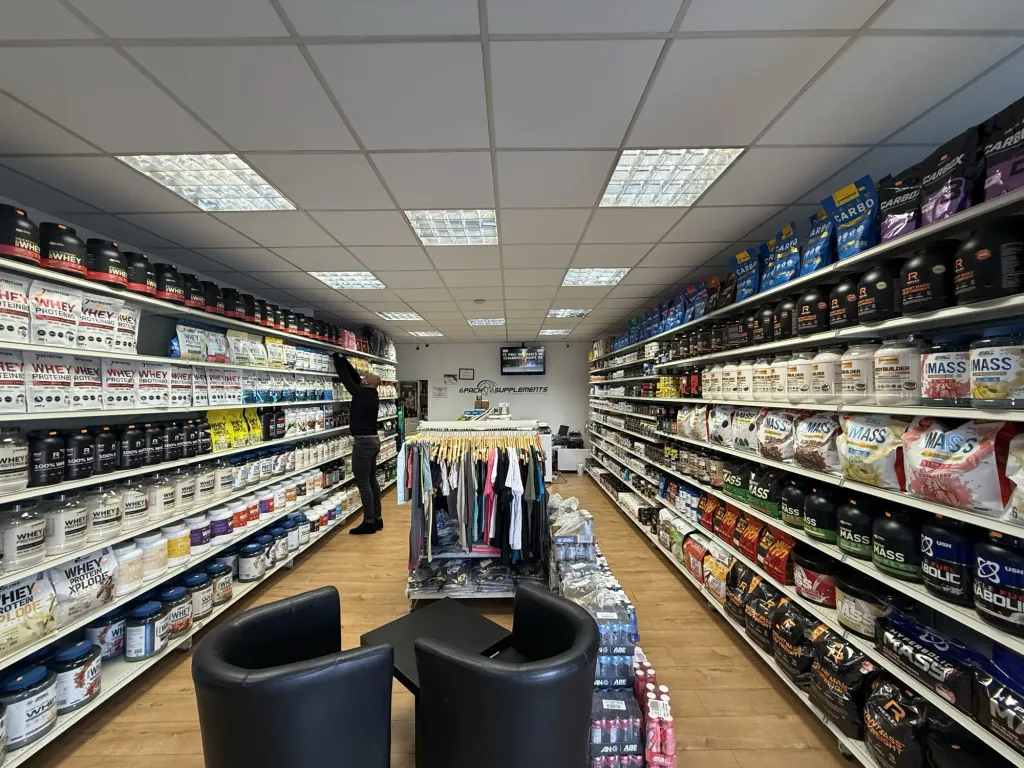
Not sure how a label adds up? Ask us in the Reading shop and we'll go through it with you.
Which should you choose?
- Morning or lunchtime training, and you tolerate caffeine well: a stim pre-workout can suit you. Choose a caffeine amount you're comfortable with, and count your coffee.
- Training after work or in the evening: go stim-free (more on that below).
- Already drinking plenty of coffee or energy drinks: stim-free keeps your daily total in check.
- New to pre-workouts: start with stim-free, or with half a serving of a stim product if the label suggests it.
Training in the evening? Go stim-free
Caffeine stays in your system for hours, and EFSA found that even 100mg near bedtime may affect sleep in some adults. If you train after work, a stim-free pre-workout gives you the flavour and routine without the caffeine. If you mainly want something to sip during an evening session, an EAA or electrolyte drink with no caffeine listed is another option.
Who should avoid pre-workouts
- Under-18s.
- Anyone who is pregnant or breastfeeding.
- Anyone with a heart condition or high blood pressure.
- Anyone sensitive to caffeine, in the case of stim versions.
- If you take medication or have any other medical condition, check with your GP or pharmacist first.
Using it safely
- Start low. Many labels suggest trying half a serving first to see how you react.
- Never go beyond the label, and don't combine two pre-workouts or add energy drinks on top.
- Mix it properly with the amount of water on the label. Don't "dry scoop" the powder: it's a choking and inhalation risk.
- Drink fluids through your session. The NHS notes you may need more fluid when you're physically active for long periods.
- Stop if you feel unwell. A racing heart, chest pain or dizziness means stop and seek medical advice.
FAQs
How long before training should I take it?
Follow the label. Most say 15–30 minutes before you start.
Why does pre-workout make my skin tingle?
That's beta-alanine. The tingle is a common, temporary reaction and usually fades within about an hour.
Can I have a coffee as well?
Only if your total stays within 400mg for the day, and don't stack a strong coffee on top of a high-stim scoop. It's simpler to have one or the other.
Can I take pre-workout in the evening?
Choose stim-free. EFSA found that even 100mg of caffeine close to bedtime may affect sleep in some adults.
Sources
- Guest NS, et al. (2021). International Society of Sports Nutrition position stand: caffeine and exercise performance. JISSN, 18:1.
- EFSA Panel on Dietetic Products, Nutrition and Allergies (2015). Scientific Opinion on the safety of caffeine. EFSA Journal, 13(5):4102.
- Food Standards Agency: Caffeine guidance
- NHS: Water, drinks and your health / Eatwell Guide
Who wrote this
6 Pack Supplements team at our Reading store.
Not medical advice
This guide is general information. Speak to your GP or pharmacist before taking supplements if you're pregnant, take medication or have a medical condition.