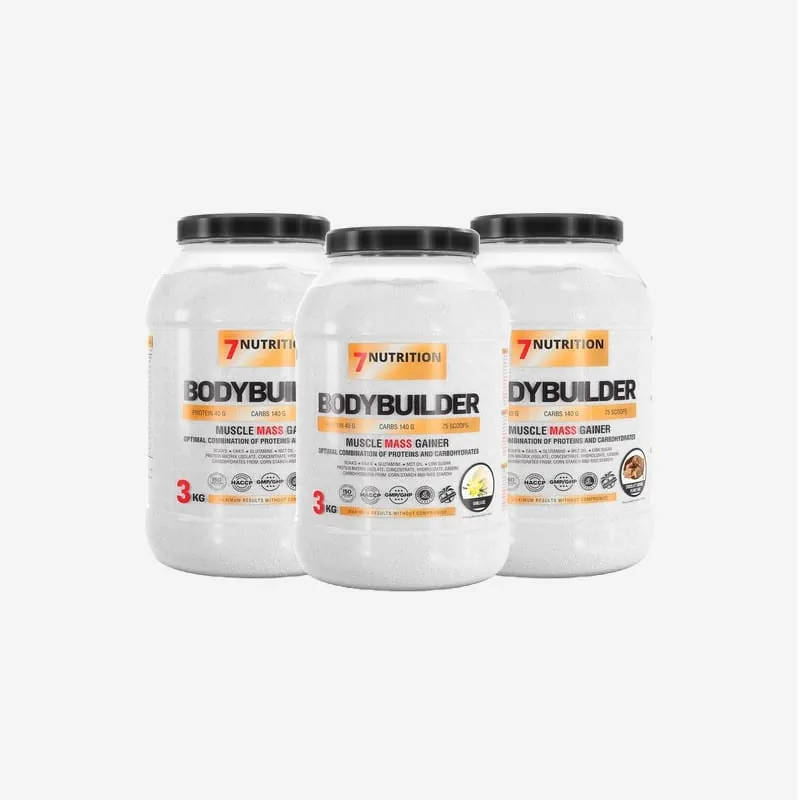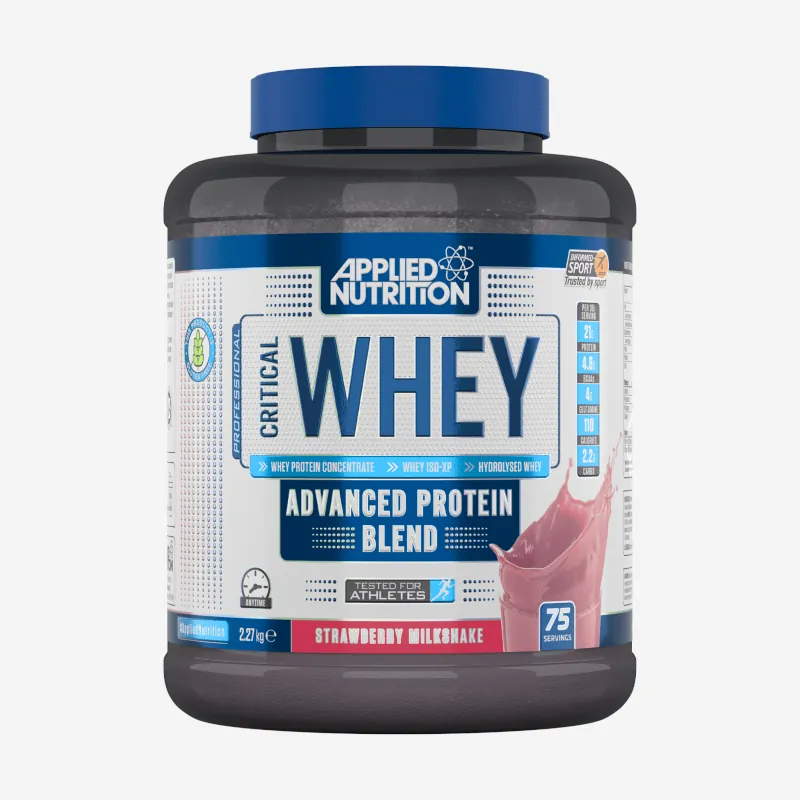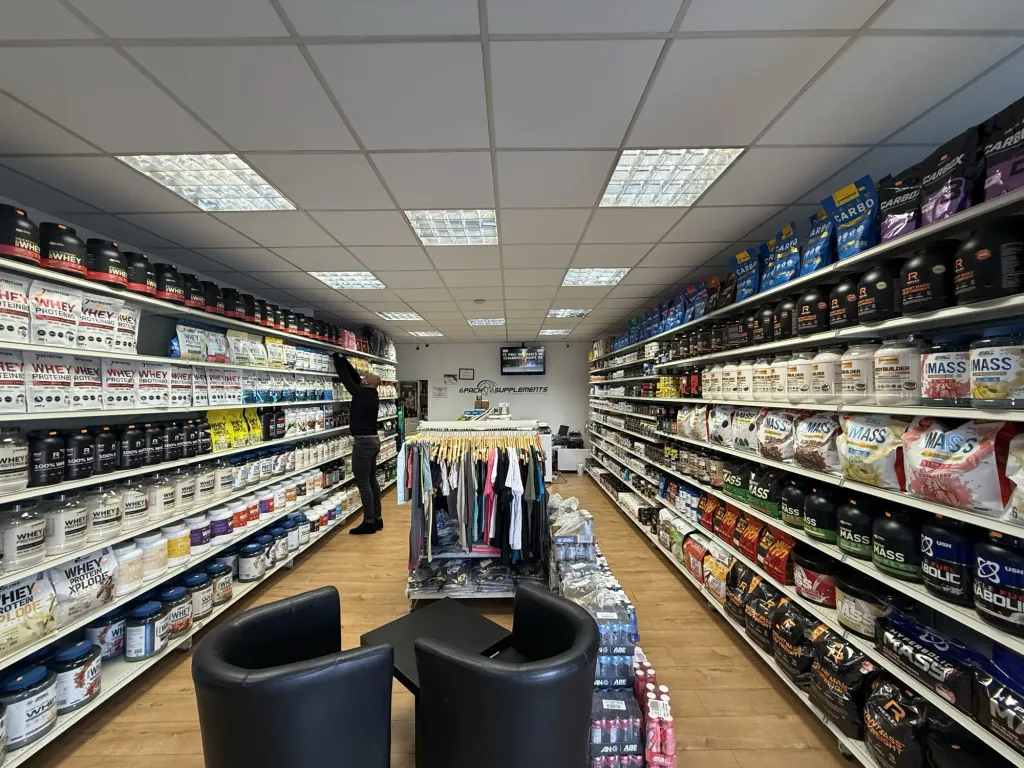
A mass gainer is a protein shake with a large amount of carbohydrate added. The two we stock give 566–766kcal and 40–42g of protein per serving, against roughly 110–140kcal and 21–27g of protein for a serving of whey. A gainer earns its place if you genuinely struggle to eat enough to gain weight. If you simply want more protein, whey plus normal meals costs less per gram of protein and fits around the food you already eat.
What's the difference?
Whey protein
Whey is a milk protein, and a whey powder is mostly protein with very little else. A 30g serving of Applied Nutrition Critical Whey gives 21g of protein for 110.5kcal, and a 35g serving of 7Nutrition Whey Protein 80 gives 27.3g of protein for 138kcal, each with about 2g of carbohydrate. It's a way to add protein to your day without adding many calories.
Mass gainer
A gainer is protein plus a big dose of carbohydrate, and sometimes some fat, in a much larger serving:
- Applied Nutrition Critical Mass: a 150g serving (2.5 scoops) gives 566kcal, 42g of protein, 74.7g of carbohydrate and 10g of fat. Most of the carbohydrate comes from oats and maltodextrin, with 2.9g of sugars, and each serving also contains 5g of creatine.
- 7Nutrition Bodybuilder: a 200g serving (5 scoops) gives 766kcal, 40g of protein, 140g of carbohydrate and 5g of fat. The carbohydrate comes from corn starch, rice starch and isomaltulose.
So a gainer isn't a stronger protein. Per serving, it has roughly as much protein as one and a half to two servings of whey. The real difference is several hundred extra calories, mostly from carbohydrate.
Mass gainer vs whey: the numbers
| Product | Serving | Calories | Protein | Carbs | Cost per serving | Good for |
|---|---|---|---|---|---|---|
| Critical Mass 2.4kg (gainer) | 150g | 566kcal | 42g | 74.7g | About £2.50 | A low-sugar gainer with creatine included |
| Bodybuilder 3kg (gainer) | 200g | 766kcal | 40g | 140g | About £2.53 | The most calories in one shake |
| Whey Protein 80 2kg (whey) | 35g | 138kcal | 27.3g | 2g | About £1.01 | The higher-protein whey of the two |
| Critical Whey 2kg (whey) | 30g | 110.5kcal | 21g | 2.2g | About 75p | Everyday protein at the lowest cost here |
Cost per serving is the shelf price divided by the servings in the tub, worked out from pack weight and serving size, so use it as a guide. Critical Whey's figures are for Strawberry Milkshake; Whey Protein 80's chocolate flavours have 26.25g of protein.
Per pound spent, the wheys give you about 27–28g of protein and the gainers about 16–17g. What a gainer really sells you is convenient calories.
Who a mass gainer suits
A gainer is a tool for one specific problem: not eating enough to gain weight. It tends to suit you if:
- You've genuinely tried to eat more and your weight hasn't moved. For example, your weekly average has stayed flat for three or four weeks despite bigger meals.
- Big meals are a struggle. Some people find it much easier to drink calories than to eat them.
- Your days are long or irregular. Shift work, early starts or travel can make an extra meal unrealistic, while a shake takes a minute.
- Your calorie needs are high. For example, you play a sport as well as lifting weights.
It's probably not for you if your weight is already going up, if you're trying to lose fat, or if what you're short of is protein rather than calories. In those cases, whey is the better fit. Not sure which group you're in? Pop into our Reading shop and we'll talk it through.
Why most people do better with whey and food
- Protein costs less, as the per-pound figures above show.
- You control the calories. A serving of whey adds about 110–140kcal, so you can pair it with whatever food fits your target rather than committing to 566–766kcal in one go.
- Food brings more than calories. Meals built the way the NHS Eatwell Guide suggests, around starchy foods such as potatoes, bread, rice and pasta plus plenty of fruit and vegetables, also give you fibre, vitamins and minerals.
- More protein isn't always the answer. Protein contributes to the growth and maintenance of muscle mass. The International Society of Sports Nutrition (ISSN) suggests 1.4–2.0g of protein per kg of body weight a day for most exercising people (Jäger et al., 2017). A 2018 meta-analysis found that, on average, extra protein made no further difference to lean mass once intake passed about 1.6g per kg a day (Morton et al., 2018). If you're already there and your weight isn't moving, the missing piece is usually calories. Our protein powder guide covers the other options.
Make your own gainer shake
If you want gainer-level calories from ordinary food, blend these together (you'll need a blender rather than a shaker):
| Ingredient | Approx. calories | Approx. protein |
|---|---|---|
| Whey, 1 serving | 110–140kcal | 21–27g |
| Oats, 50g | 185kcal | 5g |
| Banana, 1 medium | 100kcal | 1g |
| Peanut butter, 15–25g | 90–150kcal | 4–6.5g |
| Milk, 400ml (semi-skimmed to whole) | 190–260kcal | 13–14g |
| Total | Roughly 675–835kcal | Roughly 44–54g |
All figures are approximate and vary by brand, so check your own labels.
That puts a homemade shake in the same range as a serving of Bodybuilder, and above Critical Mass, with a little more protein than either. You choose exactly what goes in, and you can make a smaller one on days you've eaten well.
A few tips: blend the oats on their own first for a smoother shake, use a frozen banana if you like it thick, and start with the smaller amount of peanut butter.
How to avoid gaining mostly fat
Any calorie surplus adds some fat along with muscle, whether it comes from a gainer or a plate of pasta. No shake decides which you gain. What you can control is the size of the surplus.
- Aim for a slow, steady gain. A review of off-season nutrition for bodybuilders suggests that novice and intermediate bodybuilders aim to gain about 0.25–0.5 per cent of their body weight a week, and that advanced bodybuilders are more conservative (Iraki et al., 2019). For a 70kg person, that's roughly 175–350g a week.
- Track your weight weekly. Weigh yourself a few mornings a week, before eating, and compare weekly averages rather than single days, which bounce around with food and water.
- Adjust in small steps. If your average hasn't moved after two or three weeks, add a snack or half a serving of your shake. If it's climbing much more quickly than planned, pull back.
- Keep training, and watch your waist. A surplus without regular resistance training is just extra calories, and if your waist is growing quickly too, the surplus is probably too big.
Using a gainer sensibly
- Start small. Try one serving a day, or half, and see how your weekly average responds. Critical Mass's label allows one to three servings a day depending on your calorie needs; Bodybuilder's says one a day. Don't go beyond the label.
- Have it between meals, not instead of them, and weigh the powder, as scoops are approximate.
- Count the creatine. Each serving of Critical Mass contains 5g of creatine, so count it if you already take creatine (see our creatine guide).
- Compete in tested sport? Critical Mass and Critical Whey are both batch tested under the Informed Sport programme.
Safety note
Both gainers contain milk. Critical Mass also contains oats (gluten) and soya, Bodybuilder may contain soya and nuts, and peanut butter contains peanuts. Applied Nutrition advises checking with a qualified health professional before using Critical Mass if you're under 18, pregnant or breastfeeding, have a medical condition or take medication, and that's sensible advice for any gainer. For under-18s, extra calories should come from meals. If you're struggling to gain weight despite eating more, or you're losing weight without trying, speak to your GP.
FAQs
Will a mass gainer make me fat?
A gainer works like any other calorie surplus: it can add some fat as well as muscle, whether the calories come from a shake or from food. Keep the surplus small and check your weekly average.
Can I use a mass gainer instead of a meal?
It works better alongside meals. Applied Nutrition's label says Critical Mass isn't a substitute for a varied diet, and meals give you a wider range of foods than any single shake.
Can I take whey and a mass gainer together?
You can, within each label's limits, but most people don't need both. Pick whey if you're short of protein and a gainer if you're short of calories.
When should I drink a gainer?
Whenever it fits your day; between meals is easiest for most people. The ISSN describes protein timing as largely a matter of individual tolerance (Jäger et al., 2017), so reaching your daily totals matters more than the exact time.
Sources
- Jäger R, et al. (2017). International Society of Sports Nutrition Position Stand: protein and exercise. Journal of the International Society of Sports Nutrition, 14:20.
- Morton RW, et al. (2018). A systematic review, meta-analysis and meta-regression of the effect of protein supplementation on resistance training-induced gains in muscle mass and strength in healthy adults. British Journal of Sports Medicine, 52(6):376–384.
- Iraki J, et al. (2019). Nutrition recommendations for bodybuilders in the off-season: a narrative review. Sports (Basel), 7(7):154.
- NHS: Water, drinks and your health / Eatwell Guide
- GOV.UK: Great Britain nutrition and health claims (NHC) register
Who wrote this
6 Pack Supplements team at our Reading store.
Not medical advice
This guide is general information. Speak to your GP or pharmacist before taking supplements if you're pregnant, take medication or have a medical condition.